

⚖️ Court Marriage in India — Complete Process, Documents, Fees & Time (2026 Guide)
In today’s time, many couples choose to marry by their own decision — sometimes without family consent, inter-caste, or inter-religion. In such situations, Court Marriage is the safest and fully legal option in India.
Court marriage is performed under the Special Marriage Act, 1954, and it does not require any religious ceremony.
This guide explains everything you need to know 👇
✔ Complete step-by-step process
✔ Required documents
✔ Time required
✔ Government fees & lawyer charges
✔ Marriage without parents’ consent
✔ Whether a lawyer is necessary
✅ What is Court Marriage?
Court marriage is a legal marriage performed before a Marriage Officer (Registrar) in accordance with law, without any religious rituals.
It means:
No temple, mosque, or church ceremony required
No priest or religious authority needed
No caste or religion restrictions
Purely legal registration of marriage
👉 The marriage certificate issued is valid across India and internationally.
👩❤️👨 Who Can Do Court Marriage?
To be eligible:
✔ Groom must be at least 21 years old
✔ Bride must be at least 18 years old
✔ Both must be mentally sound
✔ Both must be unmarried (or legally divorced / widowed)
✔ Parties must not fall within prohibited degrees of relationship
📄 Required Documents for Court Marriage
👤 For Bride and Groom
Aadhaar Card
Identity proof (PAN / Voter ID / Passport)
Age proof (Birth certificate / School certificate)
Passport-size photographs
Address proof
Mobile number
💔 If Previously Married
👉 In case of divorce:
Certified copy of divorce decree
👉 In case of widow/widower:
Death certificate of previous spouse
👥 Documents for Witnesses
Court marriage requires 3 witnesses
Witnesses can be:
Friends
Relatives
Any adult person
Documents required from witnesses:
Identity proof
Address proof
Photographs
🏛️ Step-by-Step Court Marriage Process
🔹 Step 1 — Notice of Intended Marriage
The couple must submit a written notice to the Marriage Registrar of the district where at least one party has resided for 30 days.
The notice includes:
Names of parties
Addresses
Age details
Marital status
🔹 Step 2 — 30-Day Public Notice Period
After submission:
👉 A mandatory waiting period of 30 days applies
During this time:
Notice is displayed publicly
Anyone may raise legal objections
If no valid objection is received, the process continues.
🔹 Step 3 — Fixing the Marriage Date
After 30 days, the Registrar schedules the marriage date.
On that day:
✔ Bride and groom must be present
✔ Three witnesses must attend
✔ Original documents must be carried
🔹 Step 4 — Declaration & Signing
Before the Marriage Officer:
Both parties declare consent to marry
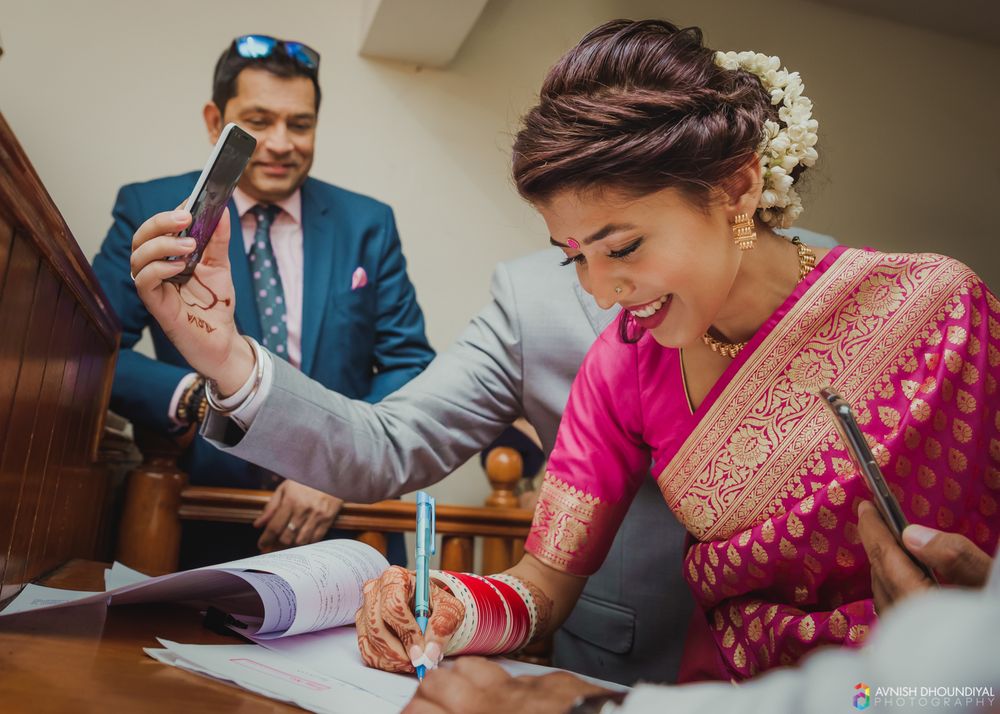
Marriage declaration form is signed
Witnesses sign the register
🔹 Step 5 — Marriage Certificate Issued
After completion:
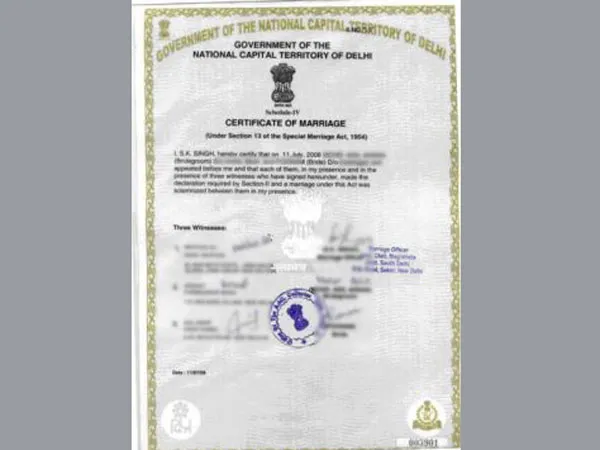
🎉 An official Marriage Certificate is issued
👉 This certificate is the legal proof of marriage.
⏰ How Long Does Court Marriage Take?
| Stage | Time |
|---|---|
| Notice submission | 1 day |
| Mandatory waiting | 30 days |
| Marriage completion | 1 day |
👉 Total time: Approximately 30–35 days
💰 Cost of Court Marriage in India
🏛️ Government Fees
₹1,000 – ₹3,000 (varies by state)
⚖️ With Legal Assistance
₹5,000 – ₹25,000 (depends on services and city)
👉 Beware of agents charging excessive amounts.
❗ Court Marriage Without Parents’ Consent
Yes, it is completely legal if:
✔ Both parties are adults
✔ Both consent voluntarily
👉 Parents or police cannot legally stop the marriage.
🚨 What If There Is Threat from Family?
If safety is a concern, couples can seek:
Police protection
Protection petition in High Court
Help from Women’s Commission or Human Rights Commission
❤️ Inter-Religion Marriage
Court marriage is the safest method for interfaith couples.
👉 No religious conversion is required.
🧠 Is a Lawyer Necessary?
Legally — No.
Practically — Helpful.
A lawyer can assist with:
✔ Correct paperwork
✔ Document verification
✔ Avoiding mistakes
✔ Faster processing
⚠️ Common Mistakes to Avoid
❌ Incorrect documents
❌ Missing age proof
❌ Witness absence
❌ Wrong address details
❌ Ignoring notice period rules
🏆 Advantages of Court Marriage
✔ Fully legal and secure
✔ Low cost
✔ Simple procedure
✔ Valid for all religions
✔ Accepted internationally
📌 Important Tips
Provide accurate information
Avoid fraudulent agents
Keep the certificate safe
Maintain digital copies
📞 For Legal Assistance
Advocate Anurag Gupta
📱 Mobile: 8240642015
💬 WhatsApp: 8931942803
📧 Email: gripshawlaw2005@gmail.com
Comments
Post a Comment